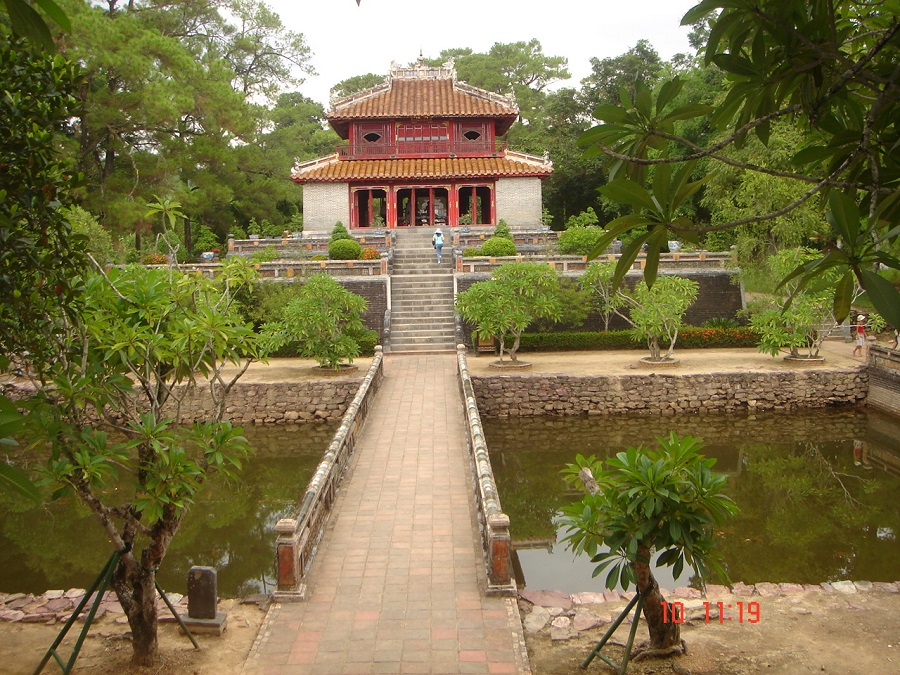
Located just 12 kilometers from Hue city center, Minh Mang Tomb is one of Vietnam’s most majestic royal mausoleums. Tucked amidst lush landscapes and tranquil waters, this final resting place of Emperor Minh Mang reflects not only his reign but also his deep connection with Confucian philosophy, nature, and balance.
As I walked through its serene grounds, I couldn’t help but marvel at the perfect harmony between architecture and nature. Let me take you through what makes this tomb so special.
A Brief History of Minh Mang Tomb
Minh Mang, the second emperor of the Nguyen Dynasty, ruled from 1820 to 1841. Known for his intelligence and strong-willed nature, he envisioned a tomb that would embody the Confucian ideals of balance and order. Although construction began in 1840 under his command, Emperor Minh Mang passed away before it was completed. His son, Emperor Thieu Tri, finished the tomb in 1843.
Spanning an area of 18 hectares, the tomb complex comprises over 40 structures, including temples, pavilions, and gates, all meticulously designed to symbolize the emperor’s legacy.
Exploring Minh Mang Tomb
- The Grand Entrance: Dai Hong Mon Gate
As you approach the tomb, the impressive Dai Hong Mon Gate welcomes you with its intricate carvings and grandeur. The gate, opened only for the emperor’s burial, sets the tone for the journey through the tomb’s sacred grounds. Visitors today enter through side gates: Ta Hong Mon (Left Gate) and Huu Hong Mon (Right Gate).
- The Symmetry of the Layout
The entire tomb is designed in a perfectly symmetrical layout, symbolizing balance and order. A straight pathway leads you from the entrance to the emperor’s burial site, flanked by lakes, gardens, and structures that create a serene and harmonious atmosphere.
- Trung Minh Lake and the Pavilion of Light
One of my favorite spots is the Pavilion of Light (Minh Lau), located on the tranquil Trung Minh Lake. This two-story pavilion was designed for contemplation and is surrounded by blooming lotus flowers in the summer. Standing there, I felt a sense of peace and connection with the natural world.
- The Stele House (Bi Dinh)
The Stele House contains a massive stone stele inscribed with Emperor Thieu Tri’s account of his father’s accomplishments and virtues. It’s a testament to the emperor’s enduring legacy.
- The Emperor’s Resting Place
At the heart of the complex lies the burial site, surrounded by the imposing walls of the Circular Citadel (La Thanh). The burial mound is accessed via a series of stairways, each symbolizing a passage to the afterlife.
The Natural Beauty of Minh Mang Tomb
Minh Mang Tomb is not just about grand architecture—it’s also a celebration of nature. The complex is surrounded by pine forests, gentle hills, and lotus-filled lakes, creating a tranquil environment. As I wandered through the grounds, the chirping of birds and the rustling of leaves added a meditative quality to my visit.
The landscape design reflects Emperor Minh Mang’s vision of harmony between man and nature. It’s no surprise that this tomb is often described as the most poetic of all the Nguyen Dynasty mausoleums.
Tips for Visiting Minh Mang Tomb
- Best Time to Visit: Early morning or late afternoon for cooler temperatures and fewer crowds.
- What to Bring: Comfortable walking shoes, sunscreen, and a water bottle. The complex is large, and you’ll want to explore it fully.
- Nearby Attractions: Combine your visit with nearby tombs such as Khai Dinh Tomb or Tu Duc Tomb for a deeper insight into the Nguyen Dynasty.
Minh Mang Tomb is more than just a burial site—it’s a reflection of a ruler’s vision, a connection to Vietnam’s rich heritage, and a peaceful retreat into nature. Standing amidst its tranquil beauty, I could feel the echoes of the past and the timeless values of harmony and balance.
If you’re exploring Hue, this tomb is a must-visit. It’s a journey through history, art, and the serene beauty of Vietnam’s imperial past. When will you take your first steps into this remarkable world?