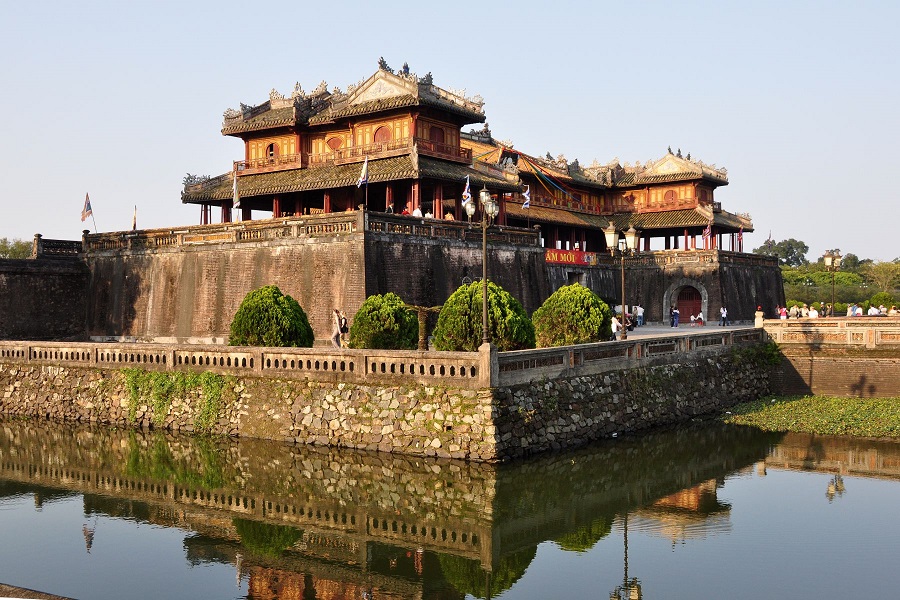
Hue’s Imperial City isn’t just a landmark—it’s a living memory of Vietnam’s golden era under the Nguyen Dynasty. Visiting this UNESCO World Heritage Site feels like stepping back in time, into a world of emperors, intricate architecture, and stories etched into every corner.
When I entered its ancient gates, I couldn’t help but imagine the grandeur of the imperial court that once flourished here. Let me guide you through this journey into Vietnam’s royal heart.
A Glimpse into History
The Imperial City, or Kinh Thanh Hue, was built in the early 19th century by Emperor Gia Long, the founder of the Nguyen Dynasty. Modeled after Beijing’s Forbidden City, this walled fortress served as the political, cultural, and religious center of Vietnam until the dynasty’s fall in 1945.
Inside the complex, emperors lived, ruled, and performed elaborate ceremonies. Though many parts of it were destroyed during wars, what remains is enough to ignite the imagination and offer a deep appreciation of Vietnam’s imperial past.

Exploring the Imperial City
Walking through the Imperial City is like peeling back layers of history. Each section reveals a new story, and each gate, hall, and courtyard carries its own unique charm.
- Ngo Mon Gate: The Grand Entrance
My visit began at the Ngo Mon Gate, the southern entrance and one of the most iconic features of the Imperial City. This massive structure, built exclusively for the emperor, stands as a symbol of power and authority.Climbing to the top level of the gate, I was rewarded with a stunning view of the expansive grounds inside. It’s easy to picture the emperor standing here, observing ceremonies or addressing his subjects.
- Thai Hoa Palace: The Hall of Supreme Harmony
Next, I found myself in front of the majestic Thai Hoa Palace. This hall was where emperors held important ceremonies, including coronations. The intricate gold and red interior reflects the traditional Vietnamese design, symbolizing prosperity and power.Standing in the hall, I could almost hear the echoes of ancient rituals and imagine the regal court bustling with activity.
- Forbidden Purple City: The Emperor’s Private World
Deep within the complex lies the Forbidden Purple City, the most private area of the Imperial City, reserved exclusively for the emperor and his family. While much of it has been lost to history, the ruins give a glimpse into the secluded life of the royal family.As I wandered through, I tried to imagine the daily life of the emperor—his moments of solitude, the delicate balance between power and vulnerability.
- Royal Theatre: A Cultural Treasure
One of the highlights for me was the Duyet Thi Duong Royal Theatre. It’s one of the oldest theaters in Vietnam, where emperors enjoyed performances of traditional music and dance. Visitors can now witness live performances, bringing the history of this cultural treasure to life.
A Complex Full of Symbolism
Every structure in the Imperial City carries deep symbolism. The layout of the complex follows the principles of feng shui, with the Perfume River to the south and Ngu Binh Mountain to the north. The balance of water, earth, and sky reflects harmony between humanity and nature—a concept deeply rooted in Vietnamese culture.
The design also emphasizes hierarchy. The emperor’s living quarters are at the center, with courtyards and administrative buildings radiating outward. It’s a subtle reminder of the central role of the emperor in governing both the state and its people.
Restoration and Preservation
The Imperial City has endured centuries of wear and tear, from natural decay to damage during the Vietnam War. Today, significant efforts are underway to restore and preserve its grandeur. As I explored, I couldn’t help but admire the dedication of those working to bring the city back to life.
Tips for Visiting the Imperial City
- Best Time to Visit: Early morning or late afternoon to avoid the heat and enjoy softer light for photography.
- Duration: Set aside at least 3-4 hours to fully explore the complex.
- Dress Comfortably: The grounds are vast, so wear comfortable shoes and bring a hat for sun protection.
- Take a Guide: To truly understand the history and significance of the Imperial City, consider hiring a guide or joining a tour.